We Teach Babies What's Dangerous — Then Spend Billions Learning It Again
Every parent teaches their child the same lesson before the age of three: fire burns, deep water drowns, and you do not stand under falling rocks. These are not complicated ideas. They are the most ancient form of risk management our species possesses. And yet, civilisation after civilisation has looked at a volcano, a fault line, a flood plain, or a wildfire corridor — and built a city there anyway. The consequences have been, and continue to be, catastrophic.
The Historical Record Is Not Subtle
In 79 AD, the Roman city of Pompeii was buried under six metres of volcanic ash and pyroclastic flow when Mount Vesuvius erupted. Over 2,000 people died in a matter of hours. The city had been thriving in the shadow of an active stratovolcano for centuries. In 1985, the Colombian town of Armero was obliterated when the Nevado del Ruiz volcano triggered a lahar — a volcanic mudflow — that travelled 74 kilometres down river valleys at speeds exceeding 60 km/h. Over 23,000 people died. Scientists had issued warnings weeks earlier. Evacuation was not ordered.
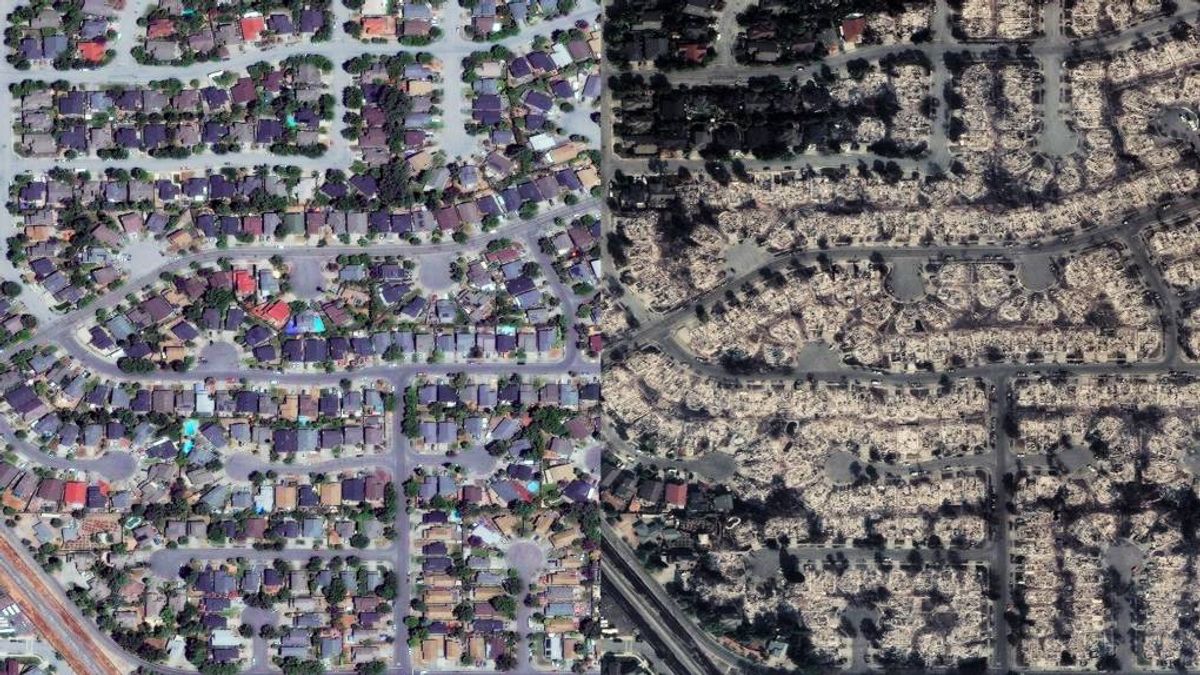
In 2018, the town of Paradise, California was destroyed by the Camp Fire — the deadliest wildfire in California's recorded history, killing 85 people and incinerating 18,804 structures. The town had been built in the Sierra Nevada foothills, a region classified as a High Fire Hazard Severity Zone, surrounded by dry chaparral, with a single main road in and out. In 2005, Hurricane Katrina exposed something even more systemic: New Orleans, a city built largely below sea level in a hurricane corridor, protected by levee infrastructure that the U.S. Army Corps of Engineers had warned for decades was insufficient. When the levees failed, 1,800 people died and 80% of the city flooded.
These are not freak events. They are predictable outcomes of knowable risks that were either ignored, underestimated, or subordinated to economic and political convenience.
The Solutions Already Exist
For **wildfire**, external building sprinkler systems — perimeter water curtains that coat the structure and surrounding vegetation — have been proven effective in Australian bushfire trials. Combined with ember-resistant roof vents, Class A fire-rated cladding (the Grenfell Tower tragedy in London in 2017 — 72 lives lost partly due to flammable aluminium composite panel cladding — made this brutally relevant), and defensible space clearance, a building's survival odds improve dramatically. The technology exists. The will to mandate it has been slower to arrive.
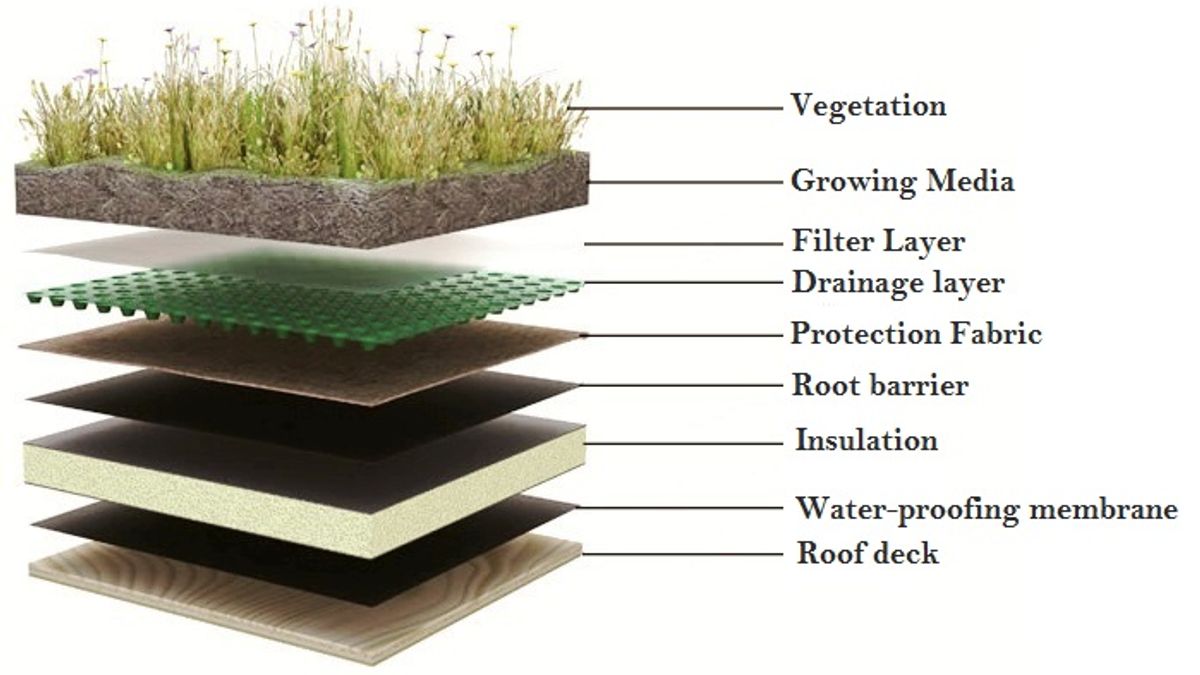
For **urban heat and fire risk in concrete tower districts**, the case for mandatory rooftop and balcony gardens has moved well beyond aesthetics. Green roofs reduce a building's surface temperature by up to 30°C compared to exposed membrane roofing, cut stormwater runoff by 60–80%, and lower ambient air temperature in the surrounding block by 1–3°C. Singapore has legislated this. Copenhagen and Paris are incentivising it. Most cities have not.
For **seismic zones**, Japan's Shinkansen bullet train network has operated since 1964 with zero passenger fatalities from derailment — because every piece of infrastructure was engineered around the reality of a seismically active archipelago. Base isolation systems — rubber pad or ball-bearing foundations that allow a building to float independently of ground movement — have been available since the 1980s. In Turkey's 2023 earthquake, which killed over 50,000 people, a significant number of collapsed buildings had bypassed seismic codes introduced after the 1999 İzmit earthquake. The knowledge existed. The enforcement did not.
The Bordeaux Fires: What Happens When We Refuse to Learn the Lesson
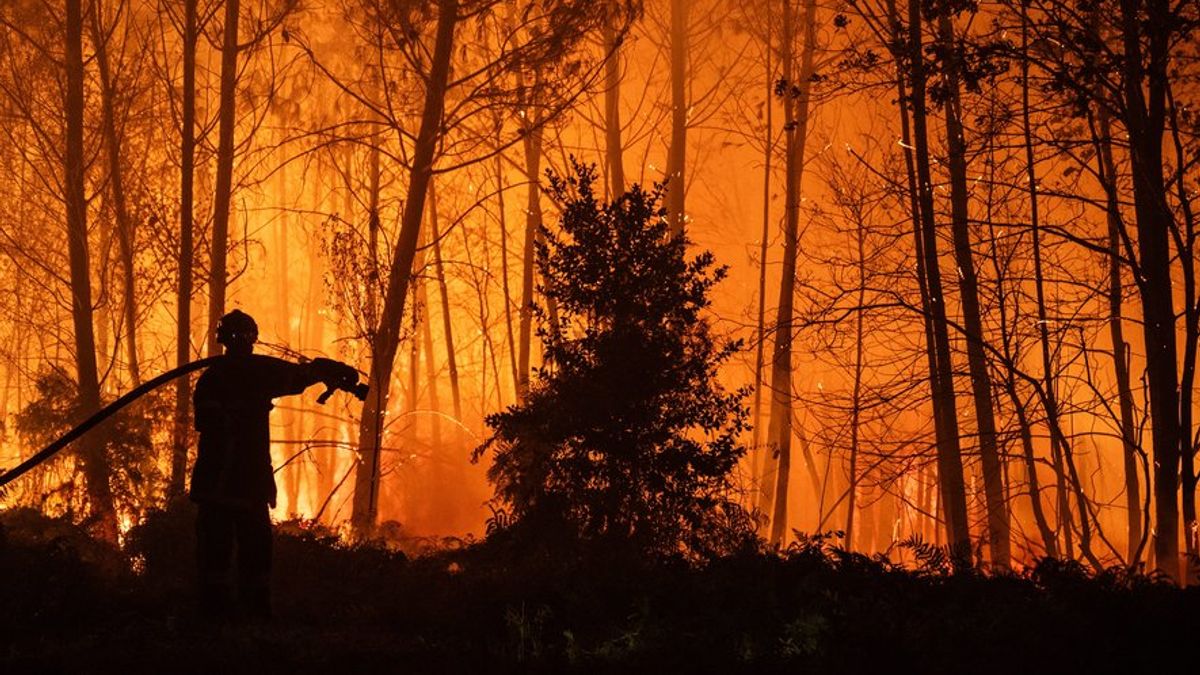
As this article is being written, in the last week of July 2026, the Gironde department in southwest France is burning. Again. Over **115,000 hectares** have been destroyed in a matter of days — an area four times the size of Paris, reduced to ash. The entire Cap Ferret peninsula — 40,000 people — has been fully evacuated. Across the Gironde and Landes departments, more than **250,000 people** have been forced from their homes. When combined with simultaneous fires in Spain, the total number of people displaced across southwestern Europe has exceeded **330,000**. France's Interior Minister Laurent Nunez described it this week as "very likely the largest civilian evacuation operation ever carried out in the country outside war."
The last time France moved this many people at once was during the Second World War.
And then there is this: the fire has become so intense that it is now **generating its own weather**. Pyrocumulonimbus clouds — towering storm systems created by the heat of the fire itself — are producing lightning that is igniting new fires kilometres away from the original front. This phenomenon has been documented in catastrophic wildfires in North America and Australia. It has never been recorded in France before. Until now.
This is not a natural disaster in the sense that word is usually meant. The Landes de Gascogne forest is not an ancient wild landscape. It is a 19th-century monoculture plantation — vast uniform blocks of Maritime pine planted for timber and resin — that burns with extraordinary ferocity precisely because of its sameness. A natural mixed forest, with broadleaf species, varying canopy heights, moisture-holding undergrowth, and biodiversity, resists fire from within. A monoculture pine plantation in a drought is, effectively, a slow-burning match.
The same region burned in 2022, destroying over 26,000 hectares and evacuating 36,000 people. It burned again in 2023. And now in 2026 — worse than either previous event by an order of magnitude.
**This is the cycle.** The trees grow back. The houses get rebuilt in the same locations. The monoculture is replanted. Fifteen years pass. The drought comes. And 250,000 people pack what they can carry and leave again.
The people evacuated this week near Bordeaux are not abstractions. They had built their lives, raised families, and invested everything in a place they trusted — in many cases, a place where the fire risk was never clearly communicated to them by the developers who sold the land, the insurers who wrote the policy, or the local authorities who issued the building permit. That is not their failure. That is a systemic failure, repeated in plain sight, across multiple decades.
STOP. What Do We Actually Do Now?
This is the question that every destroyed community eventually asks, and the one that policy consistently fails to answer in time.
**Immediately:** Affected residents have a right to accurate, independent risk assessment of their specific plot before they decide whether to rebuild. This is not always provided. Demand it — in writing — from your local authority (mairie, commune, prefecture) before signing any reconstruction agreement. In France, the Fonds de prévention des risques naturels majeurs (the "Barnier Fund") exists specifically to finance the voluntary buyout and relocation of properties in high-risk zones. It is underused. It is underfunded. Push your elected representatives to activate it.
**Who is responsible?** The answer is uncomfortable because it is multiple parties simultaneously. Developers who built in wildfire corridors and flood plains for profit. Local authorities who approved permits under political and economic pressure. National governments who repeatedly underinvested in risk mapping, enforcement, and prevention. And — critically — the insurance industry, which continues to price risk in ways that make living in dangerous zones feel financially normal, until the day it doesn't.
Climate change is accelerating all of this. The fires near Bordeaux burned in conditions — sustained drought, record heat, low humidity — that were rare events twenty years ago and are now routine summer forecasts. This is not future risk. It is present reality.
**Your human rights in this situation:** Under the UN's Sendai Framework for Disaster Risk Reduction (2015–2030), governments have a formal commitment to reduce disaster mortality, displacement, and economic loss. Under the European Convention on Human Rights, the right to life (Article 2) has been interpreted by the European Court of Human Rights to create a positive obligation on states to take reasonable measures to protect individuals from known natural hazards. If you have evidence that your local authority knew of a risk and failed to warn you or act, this is a basis for legal challenge. Consult a specialist in environmental or administrative law.
What to Push For:
**Mandatory hazard disclosure** at the point of property sale, written in plain language, not buried in technical appendices
**Hardened building codes** for all new construction in identified wildfire, flood, seismic, and volcanic risk zones — and retrofit incentives for existing stock
**Planned relocation programmes** for the most extreme-risk zones, funded at national level, with fair compensation and genuine housing alternatives provided
**Green infrastructure mandates** for urban renewal — green roofs, permeable surfaces, tree canopy targets — as standard planning conditions, not optional additions
**Fire-resilient reforestation** of burned areas with mixed native species, not monoculture replanting
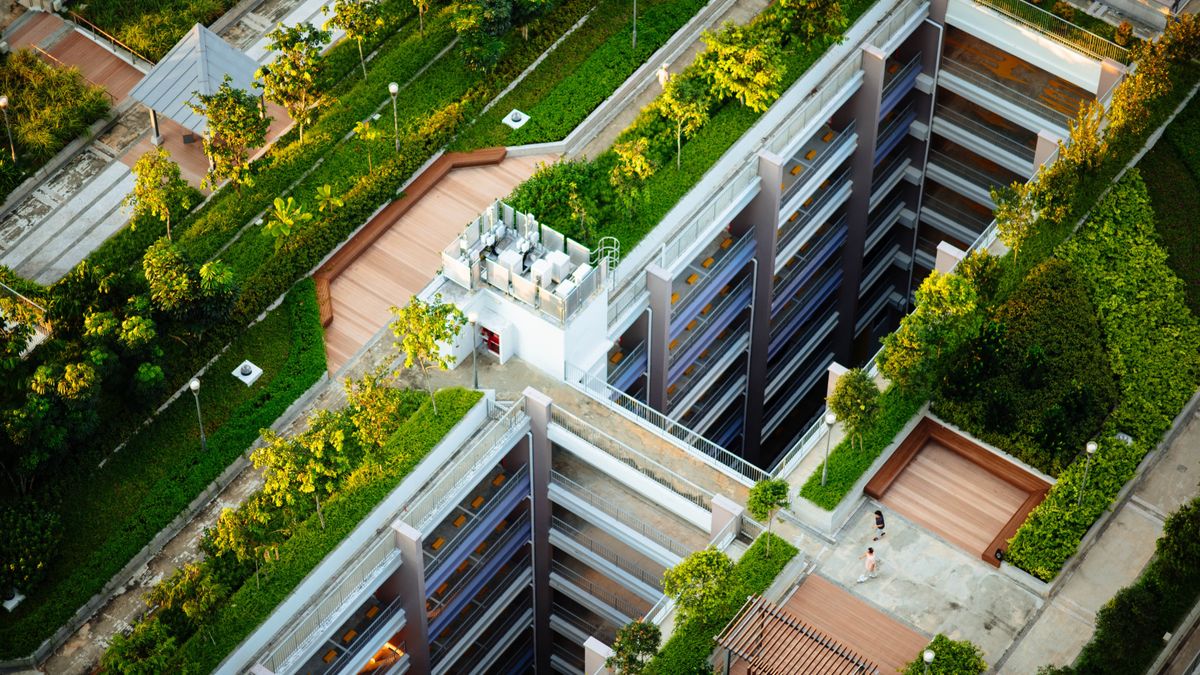
"Rotterdam's climate-adaptive architecture programme has retrofitted over 200,000 m² of green rooftop space since 2008."
How to Help Yourself Today
You cannot move a city. But you can:
- Check whether your property sits in a mapped risk zone (in France: georisques.gouv.fr — every property, free)
- Add defensible clearance space around your home (clear dry vegetation to at least 10 metres)
- Advocate for green roofs and balcony plantings in your building or neighbourhood association
- When you vote, ask candidates specifically about hazard mapping investment and relocation fund commitments
The Lesson We Keep Re-Learning
We add smoke alarms inside every home. We fit seatbelts in every car. We do not consider these inconveniences — we consider them baseline intelligence. The extension of that logic to the outside of buildings, to the siting of neighbourhoods, and to the design of cities in the face of known natural forces is not radical. It is overdue.
The forests near Bordeaux will grow back. The question is whether the houses will be built there again, by people who were never told the truth about the risk, by developers who will not be there when the next fire comes, approved by authorities who will have moved on to other offices.
We already taught the babies. It is time the adults wrote it into law.
Sources / further reading: UN Sendai Framework 2015–2030 · georisques.gouv.fr · California Department of Forestry and Fire Protection (CAL FIRE) · Fonds Barnier / MEFSIN · ECHR Article 2 jurisprudence on natural hazards (Öneryıldız v. Turkey, 2004)