Wings of Wonder: The Secret Life, Flight, and Metamorphosis of Garden Butterflies
PART 1: THE AERODYNAMICS OF A DREAMER – HOW THEY REALLY FLY
There is perhaps no creature more synonymous with the arrival of summer than the butterfly. Watching one drift lazily across a sun-drenched flowerbed, its wings catching the light like stained glass, evokes a sense of pure, uncomplicated wonder. But beneath this delicate, almost whimsical exterior lies one of nature's most ruthless survival machines—a creature that navigates with fighter-jet precision, tastes with its feet, and undertakes one of the most radical physical transformations in the entire animal kingdom.
For many of us, a butterfly is simply a "pretty insect." We admire its colors, snap a photograph, and move on. Yet, if you pause to observe, you will realize that every flutter has a purpose. Every zigzag across your lavender bush is a calculated decision. These are not fragile, mindless petals tossed about by the wind; they are master aviators, desperate romantics, and picky eaters all rolled into one tiny, six-legged package.
Whether you are a seasoned naturalist or a casual gardener, inviting butterflies into your green space transforms your garden from a simple collection of plants into a living, breathing theater of nature. In this guide, we will peel back the layers of the butterfly's existence. We will explore the astonishing physics of their flight, debunk the myth that they drift aimlessly, walk through the harrowing four-stage life cycle that defines them, and identify the most common species you are likely to encounter flitting around your European flower beds. By the end, you will never look at a butterfly the same way again.
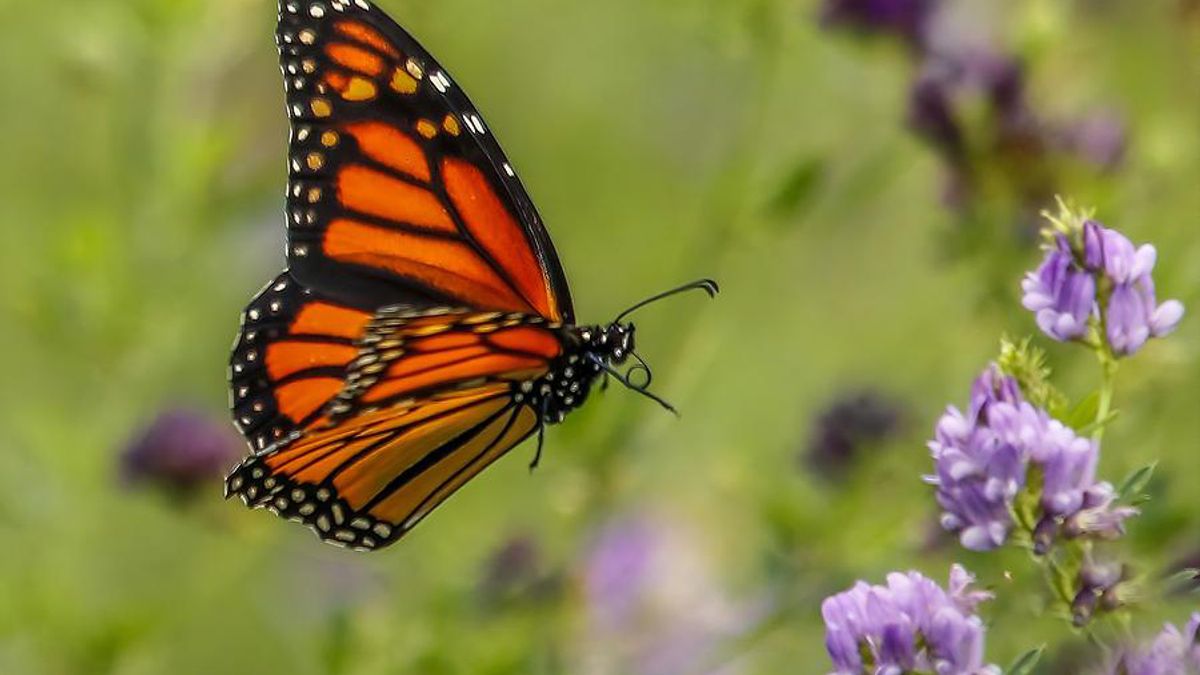
For centuries, engineers were baffled by the butterfly. According to traditional aerodynamics, their wings are far too large and flappy to generate sufficient lift. They should, by all mathematical accounts, fall out of the sky. The secret to their success lies in a chaotic, elegant trick of physics that scientists now call the "Clap-and-Fling" mechanism.
When a butterfly prepares to take off, it does not simply push down on the air. Instead, it brings its two large forewings together at the very top of the upstroke until they physically touch, clapping shut. As they clap, the air trapped between them is violently squeezed out backward, creating a powerful jet of air that thrusts the insect forward. Immediately following this clap, the wings "fling" apart, peeling open from the front edge. This peeling action creates a low-pressure vortex—a tiny, swirling tornado of air—above the wings. Just as an airplane wing creates lift by having lower pressure on top, this vortex literally sucks the butterfly upward into the sky.
This is not a one-off trick; they do this hundreds of times a minute. However, the beauty of their flight is the control they exert over these vortices. By altering the angle of their wings during the downstroke, they can tilt the vortex to steer left or right. By flattening their bodies and wings, they turn themselves into a glider, catching updrafts of warm air (thermals) to conserve energy. This is how Monarchs can migrate thousands of miles without a single rest stop.
Furthermore, butterflies are one of the few insects that can perform a "powered glide." They can briefly stop flapping but keep their wings held in a "V" shape, using the wind flowing over them to maintain altitude while they scan the ground below for food or mates. So, the next time you see a butterfly weaving through your garden, remember: it is not being pushed around. It is actively patrolling, navigating a complex 3D environment with an onboard flight computer far more advanced than any drone.
PART 2: THE CIRCLE OF LIFE – FROM HUNGRY WORM TO WINGED BEAUTY
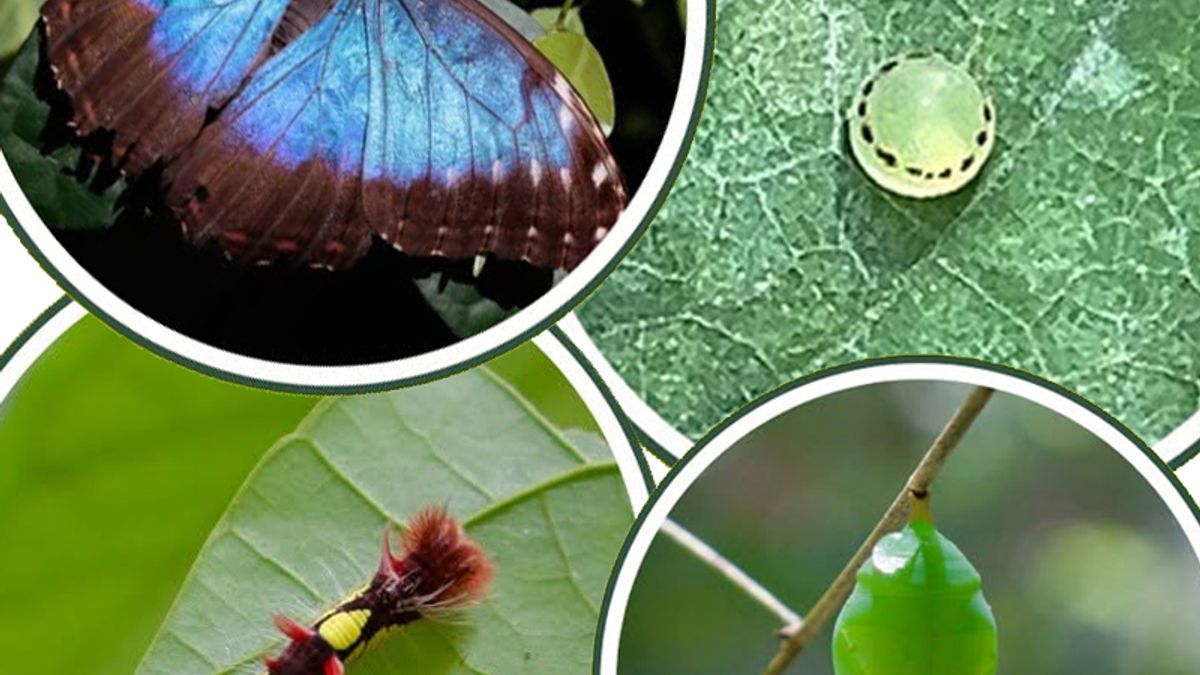
Butterflies belong to a group of insects known as Holometabola, meaning they undergo "complete metamorphosis." This isn't just growing bigger; this is a total biological reboot. Their bodies are completely dismantled and rebuilt from the ground up. Here is the grueling, miraculous journey:
Stage 1: The Egg (3 – 5 Days)
The life cycle begins with a choice—a female butterfly's choice. She is not looking for a beautiful flower to lay her eggs; she is looking for a host plant. This is a specific plant that her caterpillars will eat. The Small Tortoiseshell, for example, only lays eggs on nettles. The female uses sensors on her feet to taste the leaf before depositing a tiny, ribbed egg. These eggs are often laid singly or in clusters on the underside of leaves to protect them from rain and birds. Inside this tiny capsule, a microscopic caterpillar is already developing, feeding on the yolk.
Stage 2: The Larva (Caterpillar) – The "Eating Machine" (2 – 4 Weeks)
When the egg hatches, the first thing the minuscule larva does is eat its own eggshell for a protein boost. Then, the real work begins. The sole purpose of the caterpillar stage is to eat and grow. A caterpillar has chewing mandibles and is essentially a walking digestive tract. They eat constantly, storing up fat and energy for the radical transformation to come.
However, skin doesn't stretch. To accommodate its rapid growth (some species increase their mass by 1,000 times in just a few weeks), the caterpillar must shed its skin multiple times. Each shedding phase is called an instar. Depending on the species, a caterpillar will have between 4 and 6 instars. Before each molt, it stops eating, finds a secure spot, and literally wiggles out of its old skin, revealing a new, looser one underneath. During this stage, they are experts in defense, using camouflage (looking like bird droppings), spines, or even chemical sprays (like the Swallowtail caterpillar which emits a foul odor) to survive.
Stage 3: The Pupa (Chrysalis) – The "Factory Reset" (1 – 3 Weeks, or over Winter)
Once fully grown, the caterpillar undertakes an incredible instinctual migration. It will crawl away from its food plant to find a safe, hidden spot—perhaps under a leaf, on a fence post, or hidden in the soil. Here, it spins a tiny silk pad and attaches itself via a "cremaster" (a hooked stem). It then hangs upside down in a "J" shape.
Then, the magic happens. The caterpillar sheds its skin for the last time, revealing a hard, protective casing underneath: the chrysalis. Within this seemingly still casing, a chemical soup is brewing. The caterpillar's tissues are broken down by enzymes into a protein-rich liquid. Inside this soup, specialized "imaginal discs"—clusters of cells that have been dormant since the egg stage—begin to rapidly divide. These cells assemble into the adult structures: the compound eyes, the long proboscis (tongue), the six legs, and the four large wings. If you were to cut a chrysalis open mid-process, you wouldn't see a butterfly; you would see an orange goo with a few recognizable organs. It is chaos organized by biology.
Stage 4: The Adult (Imago) – The "Final Form" (Varies from Weeks to Months)
When the transformation is complete, the adult butterfly is ready to emerge. It splits the chrysalis casing open, usually in the early morning when humidity is high, and pulls itself out. Its abdomen is swollen with fluid, and its wings are tiny, crumpled, and wet—like wadded-up tissue paper.
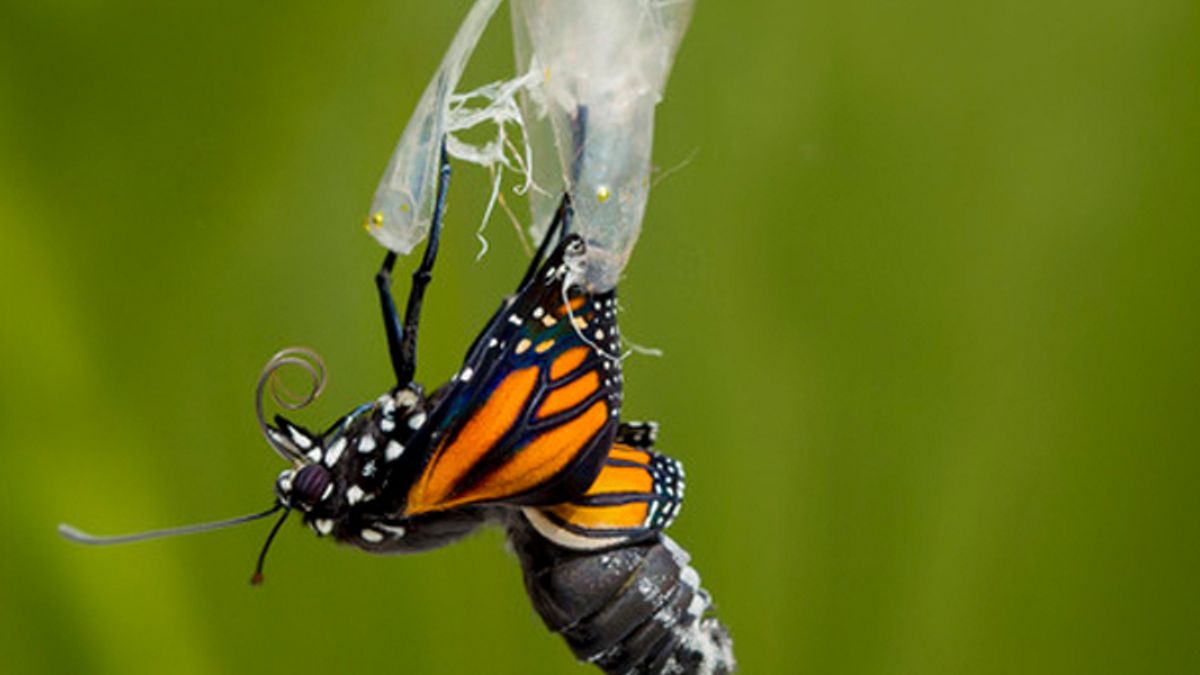
The butterfly immediately pumps this fluid from its abdomen into the veins of its wings. This is a critical moment; the wings must expand fully before the veins harden. If it emerges in a cramped space or is disturbed, the wings will dry misshapen, condemning the butterfly to a life of immobility. For about two hours, it hangs there, waiting for its wings to dry and its muscles to develop. Once ready, it takes its first test flight—often a short, clumsy flutter—and begins its final, adult mission: to find food, find a mate, and lay the next generation of eggs.
PART 3: HOW LONG DO THEY REALLY LIVE?
The lifespan of a butterfly is one of the greatest misconceptions in the natural world. Many people believe they live for just a single day. This is a myth. While some species do have short lifespans, it is rarely one day.
The lifespan is divided into two parts: the time spent as a caterpillar and the time spent as an adult. As a caterpillar, they live for 2 to 4 weeks. As an adult butterfly, the lifespan depends entirely on the species and the season.
- The Short-Lived (Summer Brood): In the height of summer, a butterfly like the Small White or Common Blue lives for a very intense 2 to 4 weeks. They are flying, feeding, and mating constantly in the warm weather. Their metabolism is running at full throttle, and they simply burn out quickly.
- The Medium-Lived (Migrants): The Painted Lady, which migrates from Africa to Europe, can live for 6 to 8 weeks, allowing them to travel thousands of miles.
- The Long-Lived (Overwinterers): Here is the exception that breaks the rule. Species like the Peacock and Small Tortoiseshell do not die in the winter. Instead, they hibernate (overwinter) as adults. They feed heavily in the autumn, storing fat, and find shelter in hollow trees, sheds, or even your attic. They enter a state of diapause (suspended development). These individuals can live for 9 to 11 months! The Brimstone butterfly is the ultimate champion; an adult Brimstone, born in July, can live through the entire winter and survive well into the following June, giving it a lifespan of nearly a full year. This longevity ensures they are ready to mate the moment the first spring flowers bloom.
PART 4: COMMON EUROPEAN GARDEN BUTTERFLIES – A SPOTTER'S GUIDE
If you live in Europe—whether in the UK, France, Germany, or Spain—your garden is a potential hotspot. Here are the charismatic stars you are most likely to encounter:
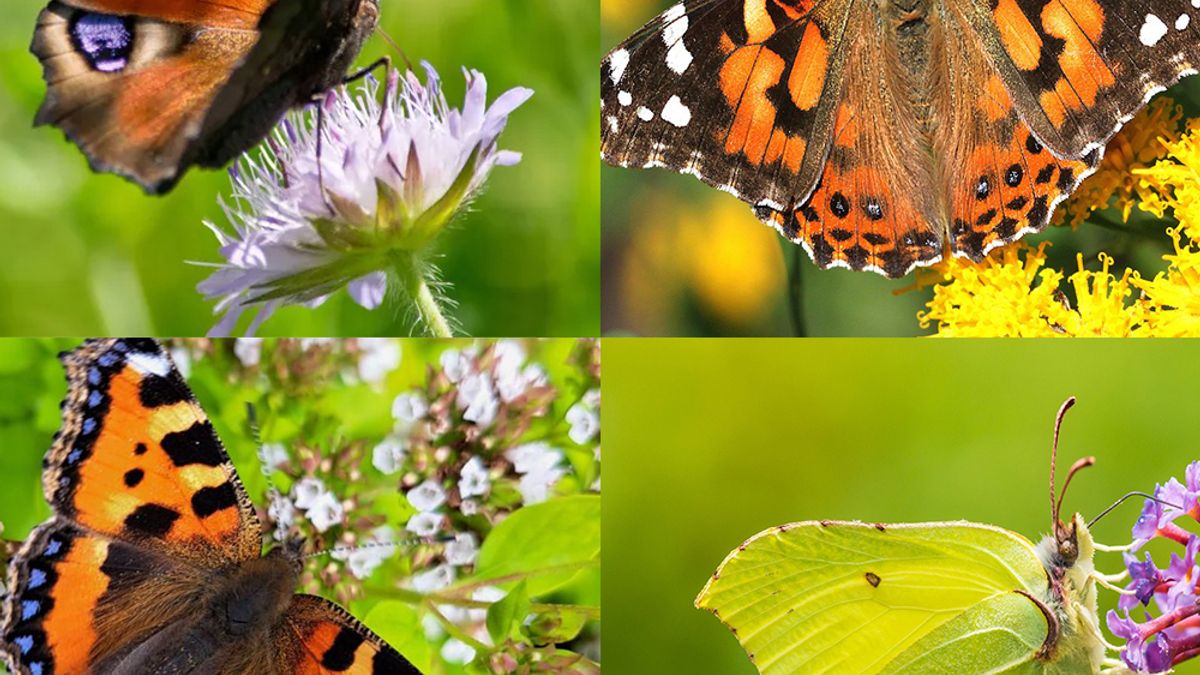
1. The Peacock Butterfly (Aglais io)
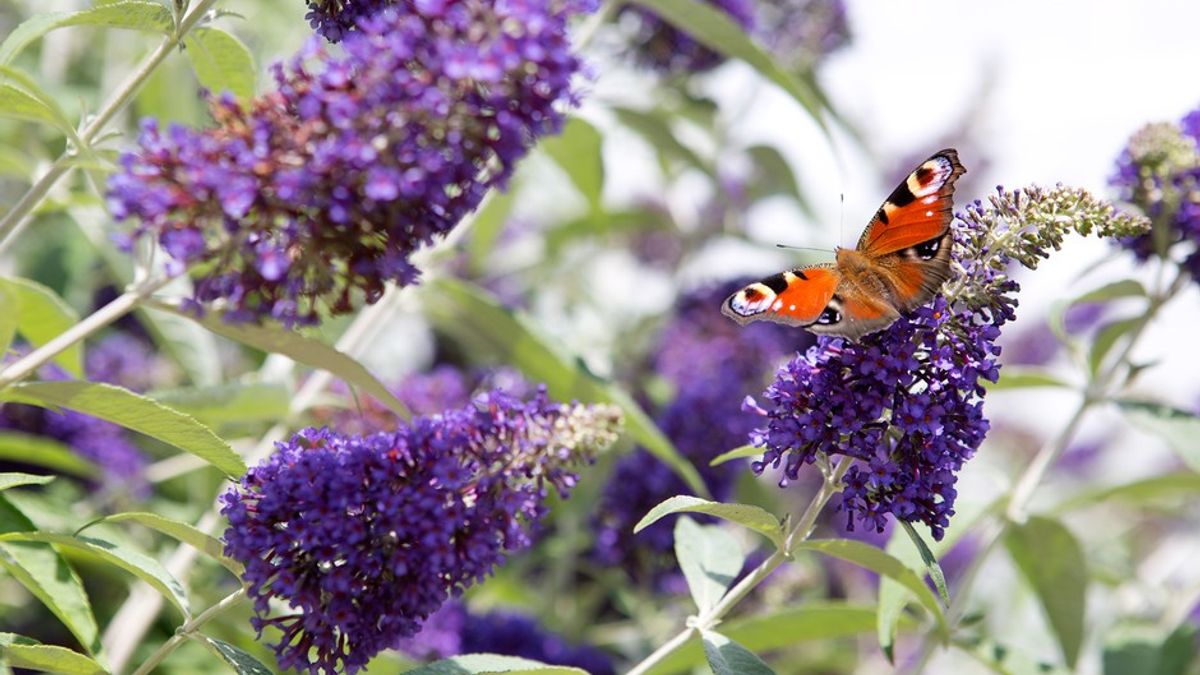
This is the rockstar of the garden. When its wings are open, it displays four massive, intimidating eye-spots on a deep burgundy and orange background. These eyespots are not for beauty; they are a defense mechanism to startle predators like birds. When resting with wings closed, it looks like a dark, dead leaf. They are fiercely territorial; you will often see the male aggressively chasing away other butterflies from his patch of sunlight. They love Buddleja (Butterfly Bush) and thistles.
2. The Small Tortoiseshell (Aglais urticae)
Once the most common butterfly in the UK and Europe, its numbers have sadly declined in recent years, though it remains a garden staple. It has a striking pattern of orange, yellow, and black, with a rim of blue crescents along the wing edge. It is intimately tied to the Common Nettle—it will only lay eggs on nettles. If you want them in your garden, you must tolerate a nettle patch in a sunny corner. They are one of the long-lived hibernators, so the ones you see in early spring are actually survivors from last year's autumn.
3. The Painted Lady (Vanessa cardui)
This is the ultimate global traveler. The Painted Lady is a true migrant. It does not hibernate in Europe; instead, it flies up from the deserts of North Africa, crossing the Mediterranean Sea in massive waves. You can recognize it by its pinkish-orange wings with a distinct pattern of black and white dots at the tips. They are incredibly variable in size; some are as small as a coin, while others are as large as a hand, depending on the temperature they experienced as a caterpillar.
4. The Brimstone (Gonepteryx rhamni)
This is the butterfly often credited with being the origin of the English word "butter-fly," due to its buttery-yellow color. The males are a bright, vivid yellow, while the females are a pale, greenish-white—so pale that they are often mistaken for Cabbage Whites. But look closer: the Brimstone has a distinct, pointed leaf-like shape to its wings. This shape, combined with its color, is perfect camouflage. When it lands on a leaf and closes its wings, it vanishes completely. They are the epitome of patience, often being the first butterfly seen in February and the last seen in October.
PART 5: WHY DO THEY FLY AROUND?
As mentioned earlier, they are not just playing. Let's put their daily flight schedule into perspective. A butterfly's daily flight is a frantic checklist of survival:
- Thermoregulation (Warming Up): Butterflies are ectotherms (cold-blooded). They cannot fly if their thoracic muscles are below 30°C (86°F). In the morning, they will fly to a sunny spot and do "wing basking"—holding their wings flat to the sun to absorb heat like solar panels.
- Nectaring (Fueling Up): This is their primary joy. They use their long proboscis (a straw-like tongue) to sip nectar from flowers. While doing this, they are also acting as pollinators, transferring pollen from bloom to bloom. You will see them zig-zagging as they evaluate the sugar content of different flowers.
- Patrolling (Looking for Mates): Males often fly in a specific, repetitive beat along a boundary (like a hedgerow). They are "patrolling" this route, waiting for a female to fly into their territory. They have excellent eyesight and will chase anything that moves into their path.
- Ovipositioning (Laying Eggs): Females fly lower, and slower. They constantly descend to brush their feet against leaves to test them. This "tasting" tells her if it is the correct host plant for her babies.
- Hill-topping: Some species (especially Blues) engage in "hill-topping." Males fly to the highest point in the landscape to display themselves, hoping to intercept females that are flying uphill.
PART 6: HOW TO ATTRACT THEM TO YOUR GARDEN
If you want to turn your garden into a butterfly paradise, you need to cater to both the adults and the caterpillars:
- Nectar Plants (For Adults): Provide a succession of flowers that bloom from early spring to late autumn. Top picks include:
- Buddleja (Butterfly Bush): The ultimate magnet. It releases a scent that butterflies can smell from miles away.
- Sedum (Ice Plant): Great for late autumn, providing energy before hibernation.
- Lavender: Loved by the Small Tortoiseshell.
- Thistles and Knapweeds: Native wildflowers that are irresistible to the Painted Lady.
- Host Plants (For Caterpillars): You cannot have butterflies without "weeds."
- Nettles: Accept this weed in a sunny corner for the Tortoiseshells and Peacocks.
- Buckthorn: The sole food for the Brimstone caterpillar.
- Wild Garlic / Cabbage: For the Whites.
- Avoid Pesticides: This is obvious but critical. Insecticides do not discriminate; they will kill your caterpillars.
- Provide "Puddling" Stations: Butterflies need minerals. Fill a shallow dish with sand and keep it wet. They will land on the damp sand to drink the mineral-rich water (known as puddling). Add a pinch of sea salt to the water for an extra mineral boost!
- Leave the Leaf Litter: Do not be too tidy in autumn. Leave piles of leaves and logs in a corner of the garden. This provides crucial hibernation spots for adults and safe places for chrysalises to overwinter.
CONCLUSION
The butterfly is a testament to the resilience and ingenuity of nature. It begins life as a ravenous, earthbound worm, builds a liquid coffin, and resurrects itself as an airborne marvel with a brain the size of a pinhead that can navigate across continents. Their flight is not random; it is the poetry of physics. Their lives are not short; they are intense.
Next time you see a red admiral drinking from your buddleja or a brimstone fluttering past your window, take a moment. Watch it land. Watch it curl and uncurl its proboscis. Remember that this fragile creature has fought against birds, storms, and frost to be here. It has a map in its head leading to a partner, and a mission to fulfill that began with a single egg on a nettle leaf.
Your garden is not just a garden; it is a sanctuary. By planting the right flowers and tolerating a few weeds, you are not just decorating your backyard—you are participating in one of the most ancient and beautiful cycles on Earth. You are offering a landing strip to a wanderer.
[QUIZ:3]